
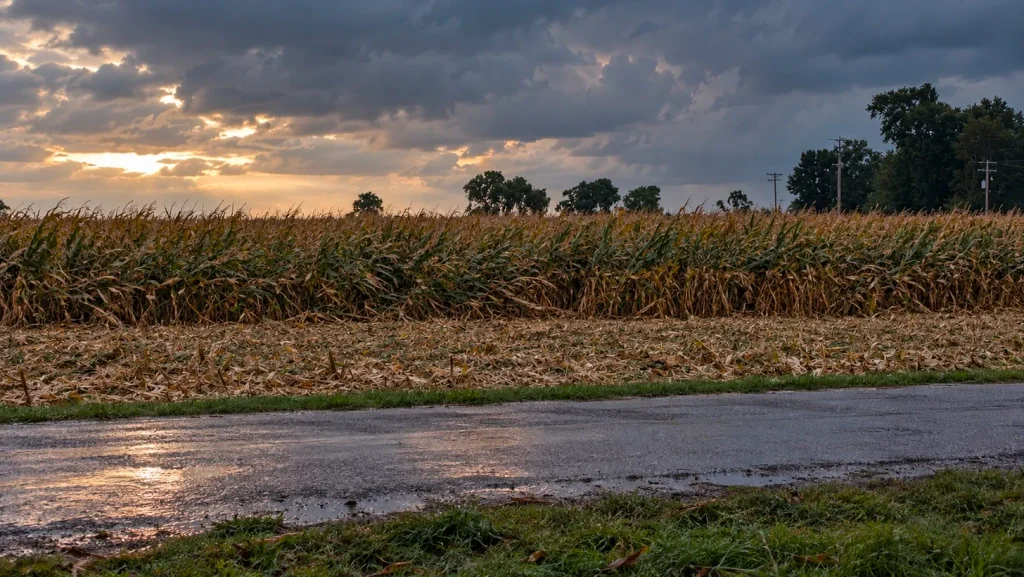
Writing from the rumors, real places, and half-remembered stories that sit beside history.
A couple of years ago, I started writing down some of the strange stories I’d heard about my local area. I tried gathering whatever details I could find or remember, gradually filling in the missing pieces. After a while, it started feeling like a strange alternative history project.
There were stories about unusual houses, something that supposedly happened on the railroad tracks years ago, old tunnels, a teacher, abandoned places, and plenty of other local oddities. Most of them were stories I’d heard in passing, sometimes from several different people who remembered them differently.
If you grew up in or around a small town, you probably know the type of stories I’m talking about. Somebody remembers an incident from years ago, somebody else knows where it supposedly happened, and another person insists they’ve heard a completely different version. The details change, but there’s usually some recognizable piece that stays the same. A particular building, a location, a name, or something unusual that supposedly happened there.
I was interested in those pieces that survived the retellings, especially when they involved real places or events. The relationship between what might have actually happened and everything people have added over the years gives these stories their character.
And once I started writing them down, I realized I wanted to add some embellishments of my own.
Fiction, With Roots
I’m treating these stories as fiction with real, local roots. Most began as things I’d heard over the years, while others came from actual places, old rumors, supposed events, or unusual pieces of local history. Some are recent enough that people around here might still remember the basic details.
That’s where I start making changes. I might swap out names, move an event to a different location, make certain details less specific, or exaggerate something that already exists in the story. Occasionally I’ll borrow a detail from one account and work it into another, or invent an entirely new circumstance that fits the setting.
I’ve also avoided directly naming the town or towns that inspired these stories. I want them to feel like they belong to a particular small town without identifying exactly where that town is. Someone familiar with the area might recognize a building, a rumor, or part of an event. Someone from another small town might recognize something completely different.
I like leaving that uncertainty in place. Spoken stories tend to change as they’re passed around, and the version someone remembers often depends on when and from whom they heard it. By the time a story has been told for a few generations, separating the original event from everything added afterward can become nearly impossible.
That uncertainty is part of what makes local folklore interesting to me.
What Changed the Project
Originally, I was basically recording and retelling the stories as I heard them. I’d make notes about where something supposedly happened, when it took place, and whatever details I could gather. Then I’d write a short story that stayed relatively close to the original account.
That worked well enough for creepy stories, but I started losing interest in making another collection of conventional local ghost tales. While trying to establish the details, I realized I was enjoying the research and uncertainty as much as the stories themselves.
I started experimenting with a more investigative approach. Instead of simply telling the reader what happened, I began writing as though someone were trying to piece together an event from incomplete information. That allowed me to introduce different perspectives, conflicting accounts, and details that didn’t necessarily agree.
One person might remember a house being on a particular street, while someone else insists it was in another neighborhood. An older resident might remember an event differently from someone who only heard about it years later. There might even be a perfectly reasonable explanation for what happened, although that explanation doesn’t necessarily account for every detail in the story.
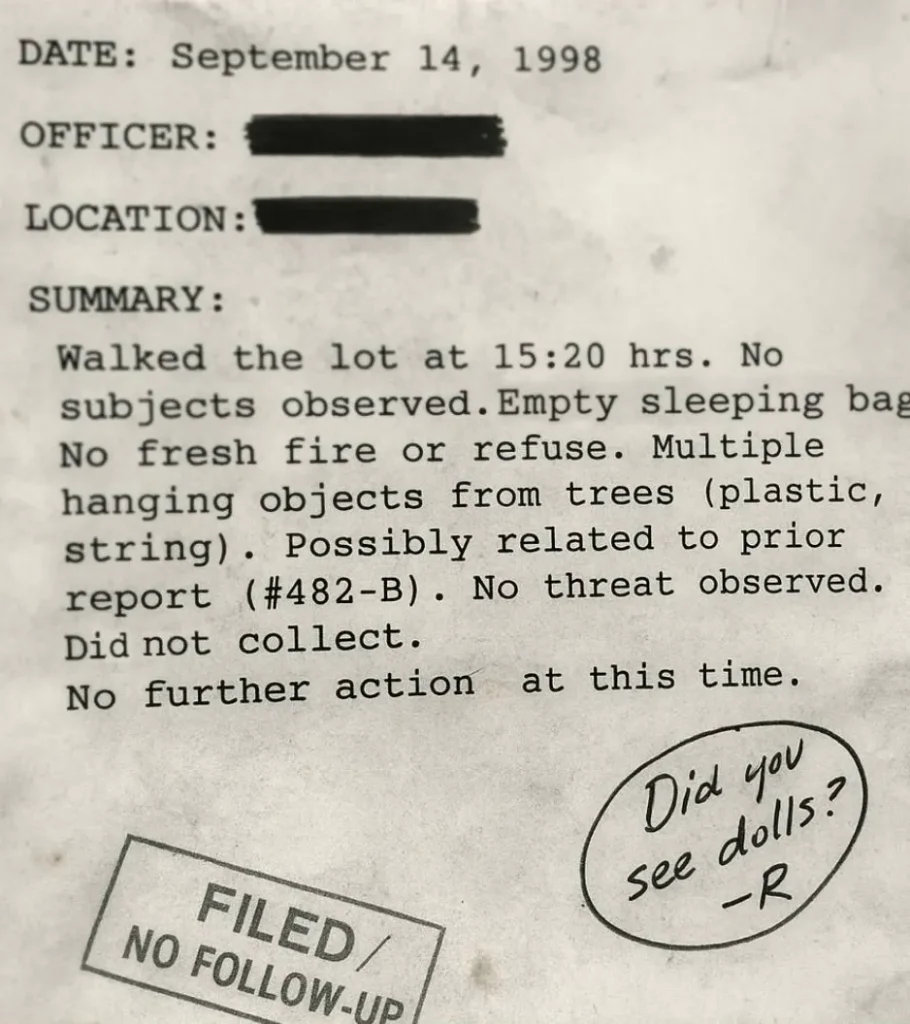
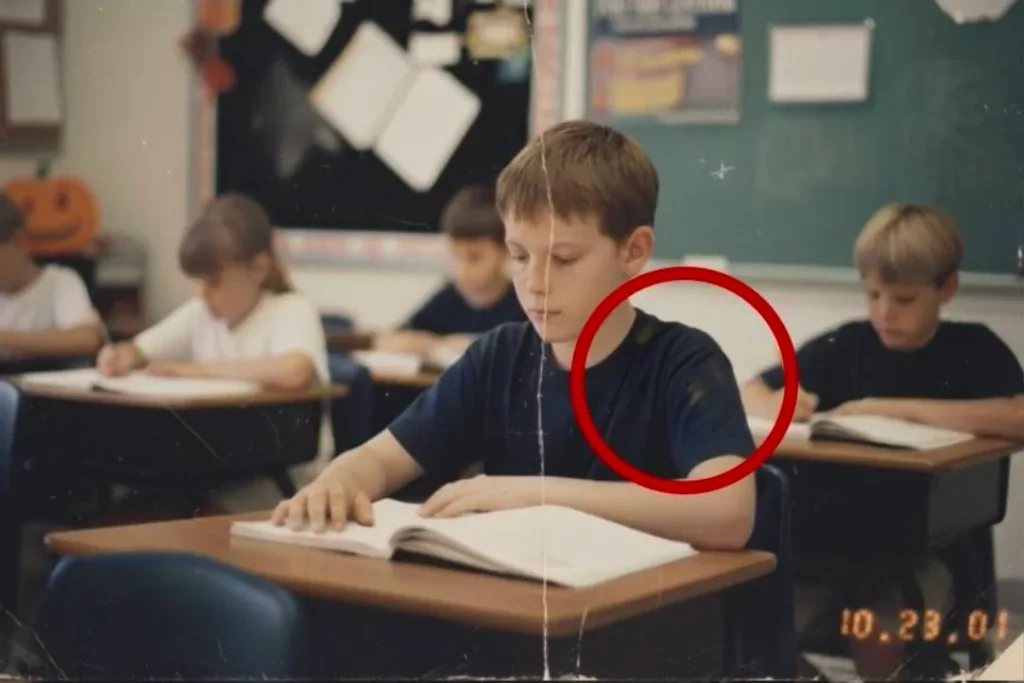
I also began thinking about the kinds of materials that might accompany an investigation. Police reports, photographs, handwritten notes, newspaper clippings, receipts, and other little pieces of supposed evidence could become part of the stories.
I liked the idea of including documents that readers could examine for themselves. Some might support the narrative, while others could introduce questions or contradictions.
That gave the stories a different feel. They could still have the atmosphere of something told around a campfire, but with enough investigative material to make the reader feel like they were looking through an old collection of case files.
I didn’t want to turn them into elaborate mockumentaries or found-footage dramas. The documents would be fictional artifacts within the stories, there to add context and give readers something else to consider.
The important thing was maintaining some uncertainty. I wanted the accounts to feel incomplete, as though the person collecting the information could only get so far before running out of evidence.
There’s something interesting about a story that has just enough recognizable detail to make someone wonder where it came from. Even discovering that one small part has a basis in reality can make the rest of the story more intriguing.
Building a Local Mythology
Once I settled on that approach, the stories became easier to develop. I had a clearer idea of how I wanted to write them and what kinds of details belonged in each one.
The stories don’t necessarily connect to each other. They have different subjects, settings, and circumstances. But writing them with a similar investigative voice helped them feel like they came from the same place.
I started thinking of them as pieces of a fictional local history. An archive of strange incidents, old rumors, and stories that people might remember differently depending on who was telling them.
The invented details could sit alongside elements inspired by reality without requiring me to explain which was which inside the story. A familiar location might make an otherwise fictional event seem plausible, while a fabricated document could introduce something that changes how the reader interprets an account.
I like the idea that someone could read one story and recognize something from their own town, even if they’ve never been anywhere near the places that inspired it.
That sense of familiarity gives me a lot to work with.
The Archive I Haven’t Finished
When I started the project, I planned to collect everything into a book. I imagined an anthology of local folklore, filled with eerie stories, recovered photographs, fictional documents, and other artifacts. Something that felt like an old archive someone had assembled over the years.
I might still make that book someday.
The problem was that I kept getting caught up in decisions about the collection. I was spending time figuring out which story should come first, how one should lead into another, and how to make the entire book feel consistent. I also wanted to experiment with different layouts and ways of presenting the documents.
The stories themselves were already written, and I’d started creating some of the visual material. But I kept working on the larger collection without actually releasing any of it.
Eventually, I started thinking that each story might work better on its own.
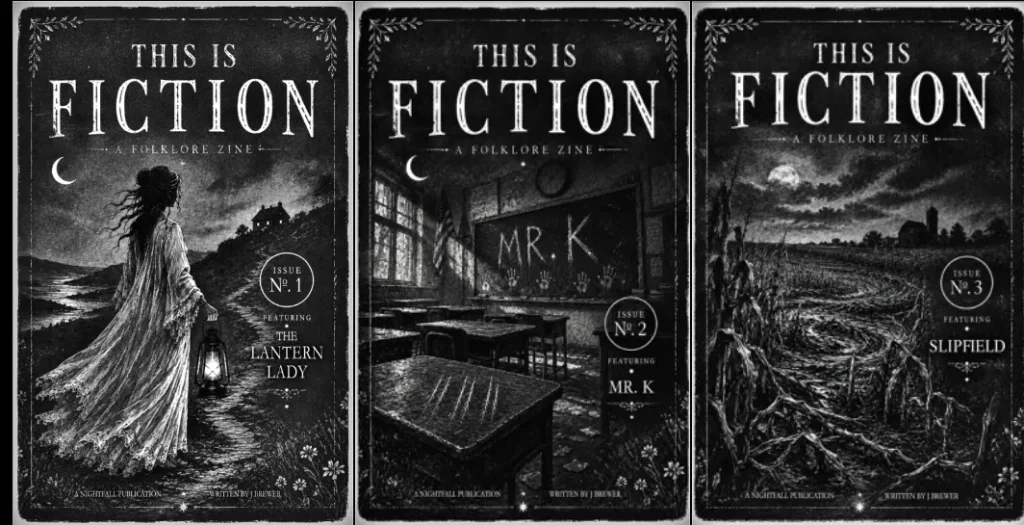
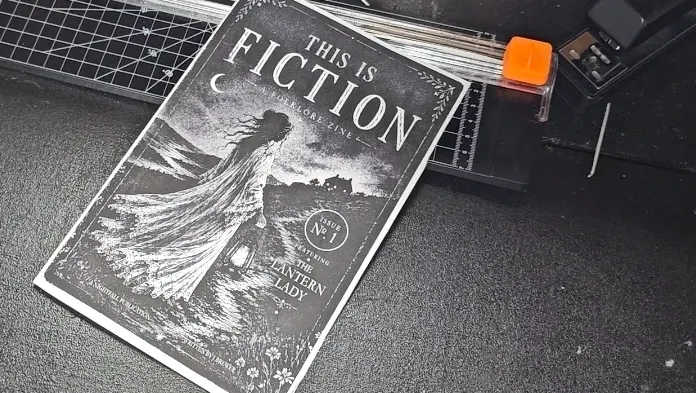
Most of them are only a few pages long, so I decided to try making individual zines. Each story could have its own cover, layout, illustrations, and documents. I could finish one, print a few copies, and then move on to the next without needing to make every decision about the entire collection first.
It also seemed appropriate for the subject matter. When you hear strange stories about a particular town, you usually don’t hear them all at once. Somebody tells you one story, and months later you might hear another. Eventually, you’ve accumulated a collection of things you’ve heard without necessarily knowing how they fit together.
I liked the possibility that someone might collect several of these little booklets over time, while someone else might only ever read one. Either way, each story could stand on its own.
And if I eventually decide to put everything into a proper anthology, I’ll have the opportunity to revisit the stories, make adjustments, and figure out how they work together after they’ve had a chance to exist individually.
Make It Exist
This change in format ended up being more important to me than I expected.
I’d spent a lot of time thinking about how the anthology should look, how it should be organized, and what I wanted the finished collection to become. Meanwhile, I already had enough material to make something.
Breaking the project into individual zines gave me a way to finish one piece without having to solve every other problem first.
I started thinking about that approach as Make It Exist.
It’s a pretty simple reminder, but one I apparently need. I have a habit of keeping projects in development for far too long. I’ll spend time researching, organizing, planning, and considering possibilities, sometimes to the point that the original idea never makes it beyond a collection of files on my computer.
With this project, I finally printed one of the stories. I could hold it, flip through the pages, show it to someone, and get an idea of what worked and what needed improvement.
That gave me something I couldn’t get from continuing to plan the collection.
The idea has also started affecting how I approach other projects.
Around the time I was working on these zines, I’d been thinking about starting a YouTube channel. Naturally, I spent plenty of time considering what kind of videos I’d make, what the channel should focus on, how I might attract an audience, and what my next ten videos could be.
I was already getting caught up in decisions about a channel that didn’t even have a first video.
Then I realized I was doing exactly what I’d been doing with the anthology.
I couldn’t know whether I’d enjoy making videos without actually making one. I could spend months developing ideas for a channel, only to discover that I didn’t particularly enjoy filming or editing.
So I decided to make the first video and find out.
I’ve since finished that video, though I still haven’t uploaded it or shared it anywhere. And whatever I decide to do with the channel, I’m glad I finally took that step.
I still have a little collection of strange stories inspired by an ordinary small town. Some of the details come from real places and old rumors, while others are entirely invented. The individual zine format feels right for them, and I’m interested in seeing how the collection develops as I finish more of the stories.
There’s still plenty I haven’t figured out. I may change the format, revise some of the writing, add new stories, or eventually gather everything into a larger book.
For now, though, I have an actual printed zine instead of another unfinished project folder.
And, thinking about it, that’s probably part of the reason this article exists too. I could have kept the idea in my notes while deciding whether I wanted to start writing publicly, what I should write about, or whether anyone would care.
Instead, I wrote something and published it.
That seems like a good enough place to start.