
Projects
Way of the Rooted Flame
How a simple idea for a daily movement routine became a personal practice, a set of handmade tools, and a complete design project.
An Idea Worth Making Real
Stillfire started with a pretty simple idea. I wanted a daily movement routine that combined elements of martial arts, strength training, balance, and mindfulness. Something I could practice at home without needing much equipment or dedicating hours to a workout. My main goals were to improve mobility, strength, and coordination while doing something I found more interesting than conventional exercise.
I’ve always been interested in martial arts, particularly the relationship between physical movement, discipline, and philosophy. I like the fluidity of Tai Chi, the deliberate movements of traditional forms, and the amount of control involved in even the simplest techniques. But I wasn’t necessarily interested in committing to an entirely new martial art. I wanted to put together a practical routine using movements that interested me, with enough structure to make it useful and enough flexibility to keep it enjoyable.
I started researching different martial arts, exercises, and movement practices to see what I could put together. The result was Stillfire Method: Way of the Rooted Flame.
It started as an exercise routine, but eventually I found myself treating it like one of my other creative projects. I was developing a system, documenting it, making equipment, and even designing an identity around it.
Finding the Structure
The first thing I needed to figure out was what I actually wanted from the routine. I wasn’t trying to build a complicated fitness program. I wanted something manageable that encouraged consistency, involved mostly standing movements, and incorporated enough variety to keep me interested.
I started researching exercises, martial arts forms, mobility drills, and movement sequences. I watched demonstrations, experimented with different combinations, and documented the movements I wanted to incorporate. A few influences kept coming up:
- Tai Chi: Fluid movement, balance, transitions, and body awareness.
- Aikido: Turning, pivoting, redirection, and coordinated footwork.
- Shaolin and traditional Kung Fu: Stances, dynamic warmups, discipline, and controlled intensity.
- Strength and mobility training: Exercises for core strength, flexibility, and stability.
- Staff work: Coordinated movement using a physical tool.
I borrowed ideas from these disciplines without trying to reproduce any of them as complete systems. As I organized the exercises, I gradually settled on five phases. The routine begins with breathing and stillness, progresses through mobility and more demanding movements, and finishes by slowing everything down again.
The Five Phases of Stillfire
| Phase | Duration | Focus |
|---|---|---|
| 01: Opening | 3–5 minutes | Breath, posture, and grounding |
| 02: Warm-Up | 5–7 minutes | Mobility and activation |
| 03: Form & Flow | 5–8 minutes | Coordination and martial-inspired movement |
| 04: Strength & Core | 5–7 minutes | Stability and controlled strength |
| 05: Grounding | 3–5 minutes | Recovery, breath, and stillness |
The complete routine takes approximately 21–31 minutes, depending on the movements, repetitions, and transitions. I don’t follow every phase exactly the same way each time. Some days I spend more time working through forms, while other days I simplify the movements or concentrate on mobility. Having a basic structure makes the routine easier to follow while leaving room to experiment.
The Philosophy Behind the Name
As I organized the practice, I started thinking about the qualities I wanted to associate with it. I eventually settled on four natural elements as a way to describe them.
Rooted Like Earth: Balance, stability, and grounding. Maintaining control of my body and paying attention to posture rather than rushing through movements.
Fluid Like Water: Moving naturally between positions. Staying relaxed enough to make controlled transitions without unnecessary tension.
Alive Like Fire: Strength, energy, and expression. Being able to introduce intensity when appropriate while maintaining control.
Calm Like Wind: Breathing, awareness, and lightness. Knowing when to slow down and return to a comfortable, relaxed state.
These aren’t principles from some ancient teaching or philosophy I’ve invented. They’re ideas I find useful when thinking about how I want to practice. The name Stillfire came from the balance between controlled, deliberate movement and physical energy. I liked the contradiction in the name, and it seemed to fit what I was building.
The Stillfire Practice
This is the basic routine I documented for myself. I’ve made adjustments as I’ve practiced and expect I’ll continue changing things over time. The movements come from existing martial arts and exercise practices, so proper form and technique are important. Anyone interested in trying them should learn from qualified instructors, especially when working with unfamiliar movements or equipment.
01: Opening | Establish the Root
3–5 minutes | Breath, posture, and balance
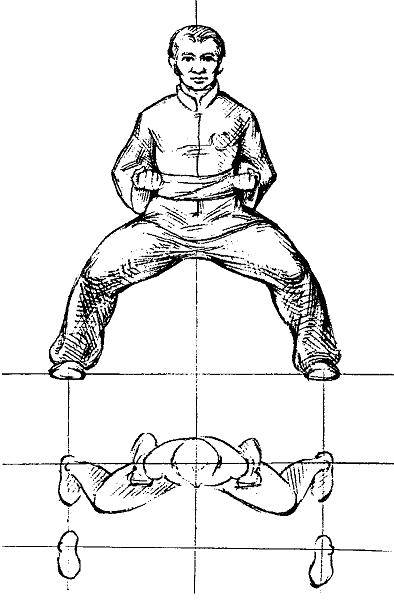
I begin with a modified horse stance, keeping my feet apart, knees comfortably bent, and back upright. I’m not particularly concerned with achieving a deep stance. I concentrate on maintaining a comfortable, stable position and paying attention to my posture.
From there, I practice slow breathing. My original routine uses a count of four seconds for the inhale and six seconds for the exhale, repeated several times. I use those numbers as a rough guide rather than forcing myself to maintain a particular breathing pattern.
I also experiment with different arm positions:
- Hands together in front of the chest
- Rounded arms, as though holding a large ball
- Fists resting near the hips
- Arms extended comfortably outward
- Arms resting naturally at the sides
I finish with gentle side-to-side weight transfers, shifting my balance between my legs. This gives me a few minutes to settle into the routine before introducing larger movements.
I begin grounded in breath, rooted in self.
02: Warm-Up | Introduce Movement
5–7 minutes | Mobility and activation
The warm-up introduces progressively larger movements to prepare for the rest of the practice. I use exercises inspired by traditional martial arts training, especially Shaolin-style loosening routines.
A typical sequence includes:
- Arm swings: Controlled movements across and alongside the body to loosen the shoulders.
- Shoulder flicks: Rhythmic arm movements performed without snapping or forcing the joints.
- Horse stance shifts: Gentle weight transfers between the legs.
- Joint mobility: Comfortable ankle, hip, and other joint movements within a natural range.
- Heel kicks with arm swings: Alternating leg and arm movements to work on coordination.
I try to move at a comfortable pace, paying attention to how everything feels rather than rushing through a set number of repetitions. One of the resources I used while developing this section was a body-activation routine by Shi Heng Yi.
03: Form & Flow | Find the Movement
5–8 minutes | Coordination, balance, and expression
This is probably my favorite part of Stillfire. Once I’ve warmed up, I start working through different martial-inspired movements and combining them into short sequences. I don’t follow one long, memorized form. Instead, I practice individual movements and experiment with connecting them.
Movement and Footwork
Some of the movements I included in my original notes are:
- Wave Hands Like Clouds: A Tai Chi movement involving coordinated, flowing transitions.
- Tenkan and Kaiten: Aikido-inspired turning and pivoting movements.
- Traditional stances: Controlled transitions between positions inspired by Kung Fu forms.
- Shadow movement: Slow strikes, steps, balance holds, and resets performed without resistance.
Sometimes I follow a demonstration to practice a particular movement. Other times I put together short sequences using movements I’ve become comfortable with. I especially enjoy the transition between different stances and the coordination required to move smoothly from one position to another.
Staff Work
I’ve also incorporated staff practice into this phase. A bo staff adds something different to the routine, giving me another object to coordinate with my movements. It requires me to pay attention to positioning, balance, and control.
The movements I practice include basic figure-eight patterns, controlled rotations, and simple transitions. I researched other traditional weapons while developing the routine, including nunchaku, but those aren’t necessary for Stillfire. For now, staff work gives me plenty to practice.
Using a staff also led to one of the more interesting parts of this project, which I’ll get into later.
Movement Resources
These videos demonstrate movements from established martial arts. I used them as references while putting together my own routine.
04: Strength & Core | Build Stability
5–7 minutes | Strength and control
The fourth phase consists of more conventional strength exercises. I chose movements that were easy to incorporate into the routine, required little equipment, and complemented the balance and mobility work.
My original plan included two rounds of the following exercises:
| Exercise | Original target |
|---|---|
| Air squats or supported squats | 10–15 repetitions |
| Standing core rotations | 10 per side |
| Light front raises | 10 repetitions |
| Standing leg raises | 10 per direction |
| Wall or modified plank | 20–30 seconds |
I prefer standing exercises whenever possible, so I included movements like core rotations and leg raises. A lightweight staff can also be used for certain controlled movements, although it isn’t necessary for the strength exercises.
These were the targets I originally wrote into my routine. They’re adjustable, and I change the repetitions or exercises depending on how I’m feeling and what I can perform comfortably with proper form. I’m not trying to replace a comprehensive strength-training program. I just wanted to incorporate some practical strength exercises into the daily routine.
05: Grounding | Return to Stillness
3–5 minutes | Recovery and reflection
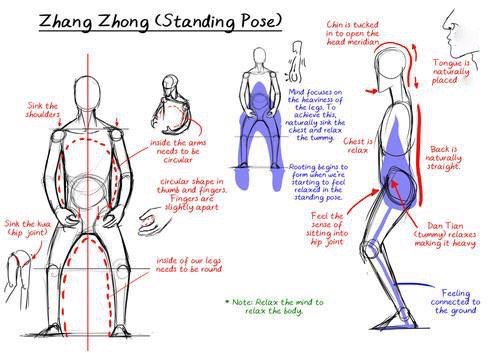
The final phase brings everything back to a slower pace. I return to standing stillness, using a relaxed posture inspired by Wu Ji from Tai Chi.
My closing sequence generally includes:
- Standing comfortably with relaxed arms
- Slow arm raises coordinated with natural breathing
- Releasing unnecessary tension
- Returning my hands to a comfortable resting position
- Taking a moment to notice how my body feels
I don’t try to maintain a particular breathing count or hold a difficult position. I like finishing the practice in roughly the same state in which I began it. After spending time moving through different exercises and forms, I return to a comfortable standing position and let everything settle.
I carry this strength into my day.
Making the Tools
One of the more enjoyable parts of Stillfire was making my own equipment. I could have purchased a traditional bo staff, but I wanted to try building something inexpensive, lightweight, and suitable for practicing at home.
I picked up some PVC pipe and foam insulation from Home Depot and started experimenting. The idea was straightforward. The pipe would provide the internal structure, and the foam would cover it.
The insulation I purchased already had a lengthwise split and adhesive for closing it around the pipe. Unfortunately, the adhesive started separating after some use, so I ended up wrapping the entire exterior with athletic tape. That held the foam together and gave the staff a better grip. I also looked into other wrapping materials, including tennis racket grip tape, sport tape, and decorative options.
My original notes included plans for two lengths:
- A six-foot staff for longer movements when I have plenty of space
- A four-foot staff for practicing in tighter areas
I was making a lightweight personal practice tool, so I wasn’t concerned with producing a traditional martial arts weapon. PVC and improvised materials have limitations, of course. They can bend, crack, or come apart, and these staffs aren’t intended for striking, contact drills, or high-speed techniques. Proper training equipment is necessary for those activities.
I enjoyed building the staff almost as much as practicing with it. The original design didn’t work quite the way I expected, so I made a few modifications. I tried different materials and adjusted things until I had something I could use.
I’ve done similar things with plenty of other projects. I have an idea for something, figure out how to make it, and keep making changes as I discover what works.
Giving the Practice an Identity
By this point, I had a routine, a collection of reference materials, some homemade equipment, and a basic philosophy behind what I was doing. I was keeping everything in Obsidian, but I wanted to make a printable guide I could use during practice.
Once I started thinking about putting the guide together, I decided it needed a name. I settled on Stillfire Method: Way of the Rooted Flame, and then, naturally, I started thinking about a logo.
I wanted the design to reference the relationship between stability and movement that I’d been thinking about throughout the project. I eventually developed an emblem based on those ideas.
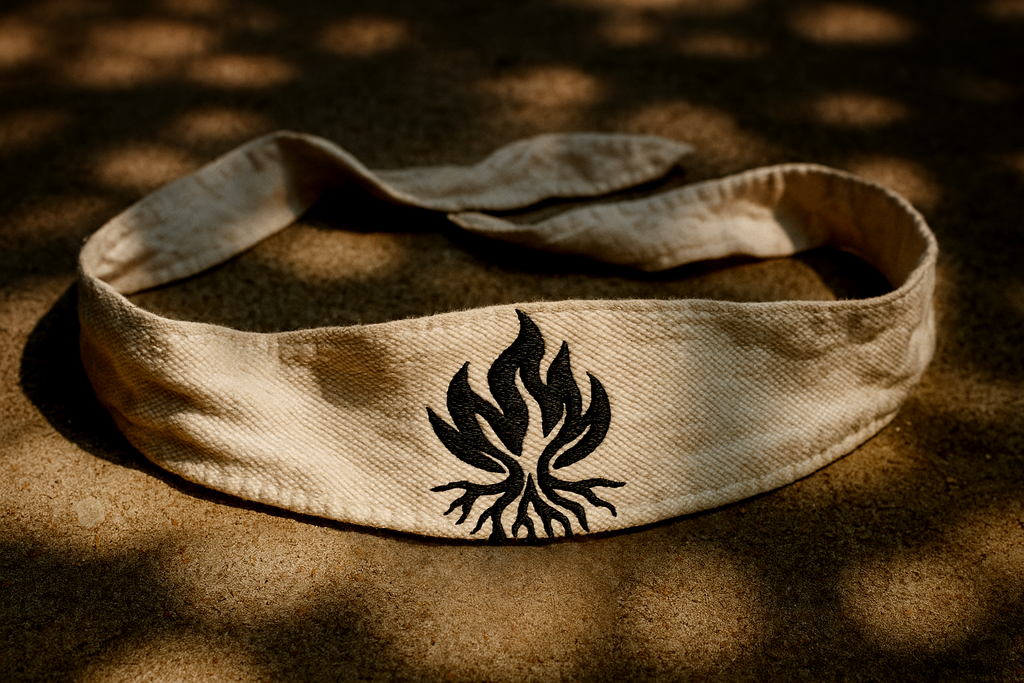
I also wanted to see how the artwork would look on objects associated with martial arts, so I created mockups showing the emblem on a uniform and a training headband.
A printed guide, a symbol, and a few mockups weren’t necessary for the exercises themselves, but I enjoy this kind of design work. Once I started developing the identity, I wanted the different pieces to feel consistent. I approached it much like I would a client design project, establishing the concept, developing the artwork, and applying it to different materials.

I’d originally set out to make an exercise routine I could follow at home. Now I had a named practice with its own structure, reference materials, equipment, and artwork. It was becoming a much larger project than I’d initially planned.
Documentation and Progression
I keep the working version of Stillfire in Obsidian, where I can update the exercises, save references, and record ideas. The routine is still something I expect to change over time, so I’ve kept the documentation flexible.
My original progression plan had three general stages.
Early Practice: Establish Consistency
Spend time learning the movements, getting comfortable with the routine, and refining transitions.
Developing Practice: Combine Movements
Begin connecting familiar movements into longer sequences while continuing to concentrate on proper technique and control.
Ongoing Practice: Continue Refining
Make adjustments based on experience, learn additional movements from qualified instructors, and document what works.
I’ve also considered keeping a practice journal. I don’t think I need to track dozens of different measurements. I’d rather record basic observations about the routine, the movements I enjoyed, what I struggled with, and anything I might want to change. Those notes could be useful when I decide to update the practice or develop another version of it.
Resources and References
Here are some of the demonstrations and tutorials I used while researching Stillfire. These resources come from established martial arts practices and aren’t part of an original Stillfire training curriculum.
Warm-Up and Mobility
Forms and Movement
Staff Practice
Stillfire Materials
Safety Disclaimer
Stillfire Method is a personal movement practice, not a formal martial art, certified training program, or substitute for professional instruction.
The descriptions and exercise targets on this page document my own routine. They are not individualized exercise recommendations. Learn proper form and technique from qualified instructors before attempting unfamiliar movements, particularly those involving martial arts, resistance equipment, or weapons.
Physical training carries a risk of injury. Practice within your abilities, use appropriate equipment and space, and stop if a movement causes pain, dizziness, or unusual discomfort. Participation is voluntary and at your own risk.
Reflection: Making Something Real
When I look back at this project, I find the process of creating it just as interesting as the routine itself.
Combining martial arts-inspired movements, strength exercises, and breathing practices isn’t a particularly original idea. I didn’t invent any of these movements, and I certainly don’t consider myself an authority on martial arts. I just wanted a routine that worked for me, so I started putting one together.
I researched movements, organized the exercises, tried different combinations, and eventually settled on a structure I liked. Then I built some equipment, developed a name and emblem, and documented everything so I could continue using and improving it. Somewhere along the way, a basic exercise routine turned into a fairly involved personal project, and I’m glad I took the time to do it.
I’ve spent plenty of time thinking through ideas only to get caught up in the details before I ever make anything. I’ll consider different approaches, possible problems, and all the things I might want to include. Sometimes I spend so much time planning that the project never gets very far.
Stillfire was a good reminder that I don’t need to figure everything out before starting. I put together a basic routine and began working with it. The other pieces came later, once I had something worth developing.
I might change the routine substantially in the future. I might replace certain exercises, learn additional movements, or eventually move on to something else entirely. I’m fine with that. I already got something useful out of the process.
I took an idea that had been sitting in my head and spent enough time working on it that I now have something I can actually use.
This is what I mean when I say make something real.